
Last updated September 10, 2026
Full 25-point door and opener safety check with every visit - springs, cables, rollers, tracks, and your LiftMaster or Chamberlain opener included
You get a price before we start. It does not change when the truck arrives.
 Before
 After
After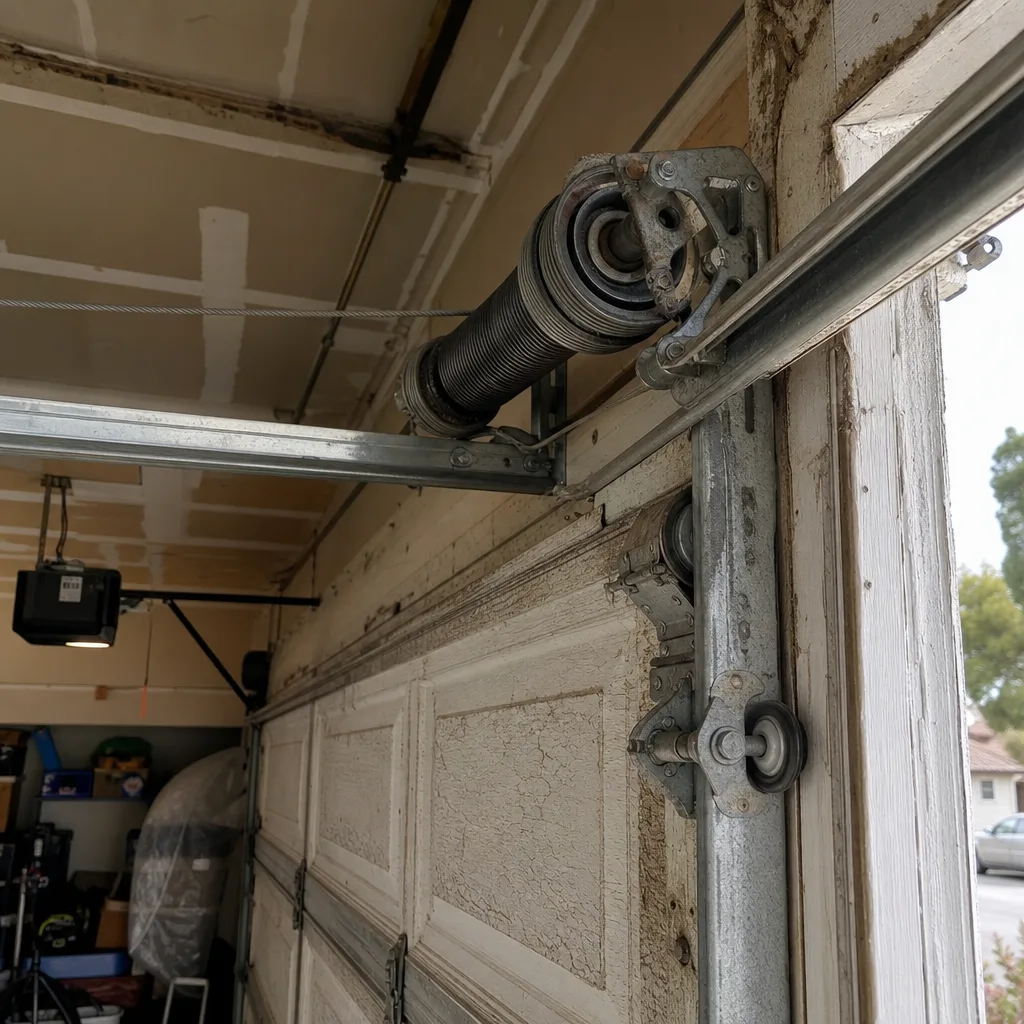 Before
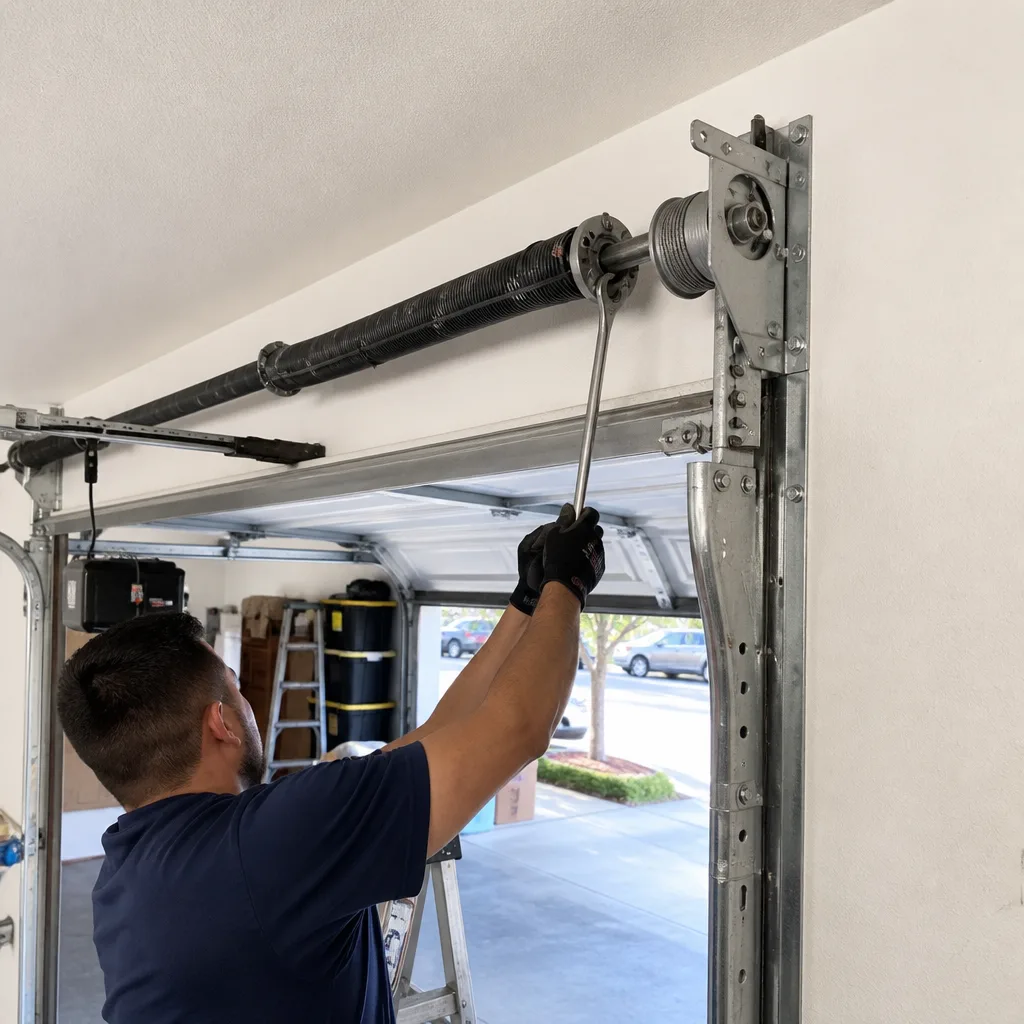 After
After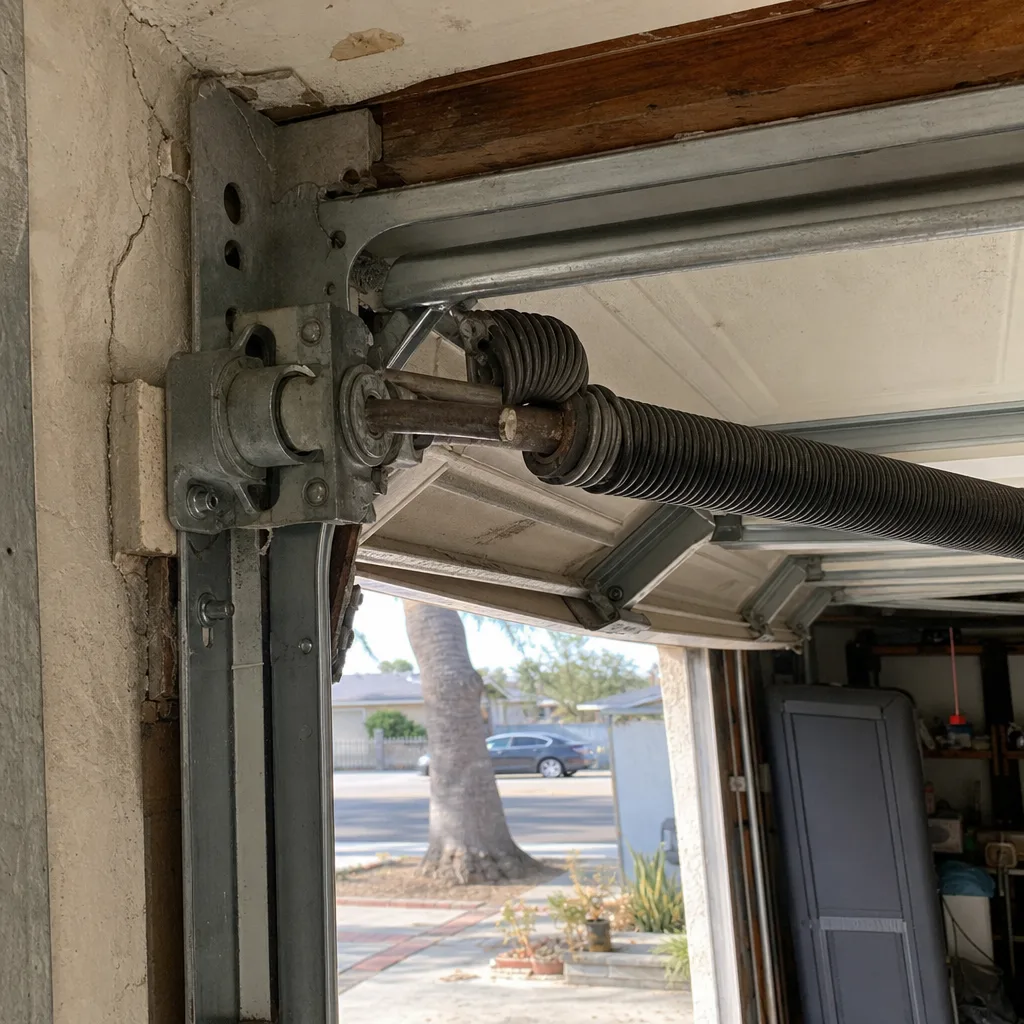 Before
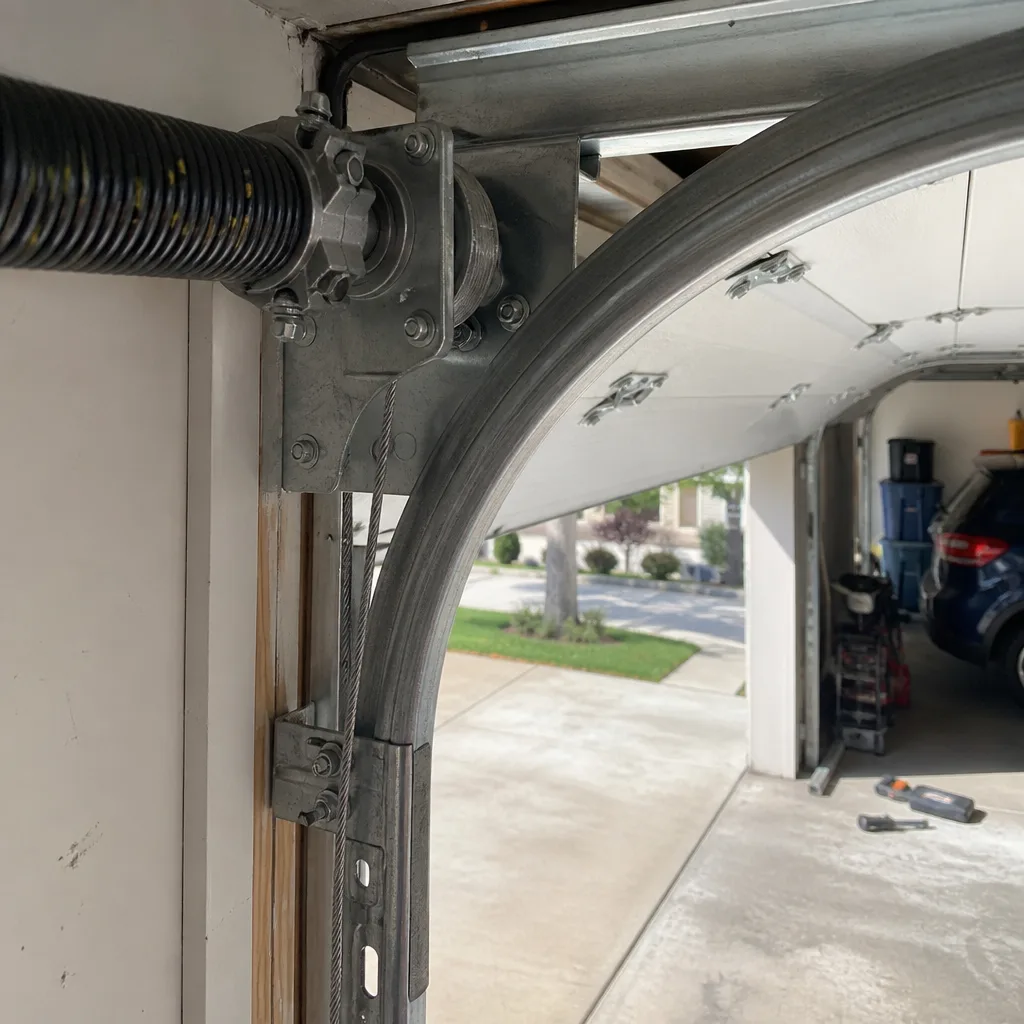 After
AfterSeasonal Garage Door Care for Van Nuys: Year-Round Homeowner’s Guide
The week after a Santa Ana wind event is our single busiest service call period of the year at Mainspring Garage Door Co. home. Not because the wind snaps cables or crushes panels directly, but because the grit it drives into tracks and rollers accelerates wear that turns into a failure two months later, when homeowners in Van Nuys have already forgotten the storm. If you’ve lived here long enough, you’ve felt that hot blast through the Valley. This guide maps what it actually does to your garage door, and what to do about it before the next cycle starts.
Quick Answer
Garage door care in Van Nuys follows three distinct periods, not four: the dry heat stretch from May through September, the Santa Ana wind season from October through January, and the brief wet season from January through March. Homeowners should inspect seals and tracks quarterly, lubricate moving parts before summer heat peaks, clear debris within 48 hours of any wind event, and replace remote batteries every October before Valley temperature swings shorten their life. Annual professional inspection catches the wear patterns that DIY checks miss.
Table of Contents
- Van Nuys Has Three Garage Door Seasons, Not Four
- May-September: The Dry Heat Protocol
- October-January: Santa Ana Wind Season
- January-March: The Brief Wet Season
- Year-Round Opener, Remote, and Battery Schedule
- How to Document Inspections for Inspectors and Adjusters
- A Simple 12-Month Maintenance Calendar
- Common Mistakes to Avoid
- When to Call a Professional
- Frequently Asked Questions
- The Bottom Line
Van Nuys Has Three Garage Door Seasons, Not Four
Most seasonal maintenance guides are written for climates with freezing winters, humid summers, and falling leaves. That is not Van Nuys, as our Complete Guide to Garage Door in Van Nuys explains in detail. Our San Fernando Valley location sits in a rain shadow with distinct atmospheric patterns that treat garage doors differently than the generic advice suggests.
Here is how we break it down after 42 years of working on doors from Lake Balboa to North Hills:
- The Dry Heat Stretch (May-September): Day after day of 90-plus temperatures, UV exposure that degrades rubber and vinyl, and thermal expansion that loosens hardware. South-facing doors in neighborhoods like Valley Glen and Van Nuys proper take the worst of it.
- The Santa Ana Wind Season (October-January): Hot, dry, high-velocity winds that load tracks with dust, strain weather seals, and create pressure differentials that stress the door’s balance. The grit is the hidden damage; the immediate noise is just the warning.
- The Brief Wet Season (January-March): Short, intense rain events that test seal integrity and accelerate rust on hardware that has been baking dry for eight months. Rust forms faster here than in consistently humid climates because the dry periods allow oxidation to penetrate, then the sudden moisture activates it.
This three-season framework shapes everything that follows. The tasks, the timing, and the warning signs all map to these specific Valley conditions.
May-September: The Dry Heat Protocol
Summer in Van Nuys is not a single heat wave. It is a months-long stress test for materials that expand, soften, and degrade under constant UV and thermal load. We see the pattern every year: calls spike in late July and August not from sudden failures, but from cumulative damage that finally crosses the threshold.
UV Seal Inspection
The rubber or vinyl seals along the sides and top of your door, and the bottom weatherstrip, are UV-sensitive. In Van Nuys, south- and west-facing doors can show cracking and hardening in as little as three years. Inspect them in early May before the worst heat arrives.
What to look for:
- Surface cracking that catches your fingernail
- Loss of flexibility: the seal should bend without cracking when pinched
- Compression set: the seal no longer springs back to full height
- Gaps visible in daylight when the door is closed
Replace compromised seals before summer peaks. A hardened seal cannot flex, and the thermal expansion of the door panel itself will force gaps that let dust, insects, and eventually Santa Ana grit enter your garage.
Track Expansion Gaps
Steel tracks expand in heat. In a standard 8-foot-wide door, the horizontal track can lengthen by 1/16 to 1/8 inch between a cool morning and a 105-degree afternoon. The mounting brackets and lag screws must allow for this movement without loosening.
Check track alignment in early June, after a few weeks of heat have cycled the metal. The vertical track should be plumb; the horizontal track should slope slightly down toward the back of the garage. If rollers bind or scrape at certain times of day but not others, thermal expansion is the likely cause. Tighten loose hardware, but do not overtighten: the track needs slight play to move.
Opener Motor Temperature Monitoring
Garage door opener motors generate heat during operation. In a hot garage, especially one with poor ventilation or a dark roof, the motor runs closer to its thermal limit. Modern openers have overload protection that shuts them down when internal temperature exceeds safe range.
If your opener stalls on hot afternoons but works fine in the morning, motor temperature is the issue. Improve ventilation if possible. Consider a thermal blanket for the motor housing on older units. And test the force sensitivity: a door that is slightly harder to move in heat will overload a marginally adjusted opener.
We are factory-familiar with all major brands: LiftMaster, Chamberlain, Genie, Clopay, Amarr, Wayne Dalton, Craftsman, and Raynor. Each has specific thermal tolerances and adjustment procedures.
Summer Lubrication Points
- Hinges and rollers: Silicone-based lubricant, not WD-40. Apply sparingly; wipe excess. The dry Van Nuys air evaporates light oils quickly.
- Torsion spring: Light coating of lithium grease. Do not attempt to adjust spring tension yourself; the stored energy is dangerous and requires proper tools and training.
- Track interior: Clean with dry cloth only. Lubricant in the track collects dust and forms abrasive paste.
- Chain or screw drive: Manufacturer-specified lubricant. Check tension while lubricating.
Our $89 Seasonal Tune-Up covers all of these points with the right products and the safety checks that go with them.
October-January: Santa Ana Wind Season
The Santa Anas are not just wind. They are a delivery system for fine, abrasive grit that infiltrates every moving part of a garage door system. The damage is not always immediate. It is cumulative, delayed, and expensive if ignored.
The Post-Event Window: 48 Hours
We schedule extra technicians the week after every major Santa Ana event. The homeowners who call early get preventive maintenance. The ones who wait call us in December or January with failed rollers, scored tracks, or opener strain that started in October.
Within 48 hours of any significant wind event, complete this checklist:
- Visual track inspection: Shine a flashlight into the vertical tracks. Look for accumulation of fine dust and debris at the lower bends and in the horizontal track. This grit acts as grinding compound once the door moves.
- Roller check: Roll the door manually to the halfway point (disengage the opener first). It should stay in place. If it drifts, the spring balance may have shifted. Listen for new scraping or grinding sounds.
- Cable inspection: Look for fraying, kinking, or grit embedding in the cable strands. The Santa Ana dust is sharp; it works into cable windings and accelerates wear at the drum.
- Bottom seal integrity: Wind loads the bottom seal with pressure, especially on doors with gaps or poor threshold contact. Check for tearing, pulling from the retainer, or permanent deformation.
- Opener force test: Run the door through a complete cycle. The opener should not strain or hesitate. Wind-blown debris in the track increases resistance; the opener compensates until it cannot.
Pre-Season Preparation
Before the first Santa Ana event of fall:
- Verify that the bottom seal makes full contact across the width of the door. A seal with gaps becomes a wind scoop.
- Check weatherstripping on any door between garage and house. Pressure differentials during wind events load interior doors too.
- Trim vegetation back from the door perimeter. Wind-driven branches cause impact damage and provide additional debris.
- Confirm that the emergency release on the opener operates smoothly. Power outages during wind events are common.
In our experience, doors in the flatter areas of Van Nuys, near the Sepulveda Basin, see more wind loading than those in sheltered canyons or behind windbreaks. The exposure matters as much as the door itself.
January-March: The Brief Wet Season
Van Nuys receives most of its annual rainfall in a handful of winter storms. The total is low, but the intensity is high. A door that has been dry for eight months suddenly faces standing water, splash-back from the driveway, and rapid humidity changes.
Why Rust Accelerates Here
This surprises homeowners: rust forms faster on garage door hardware in Van Nuys than in consistently humid climates like Miami or Houston. The reason is the dry-wet cycle. In humid climates, a stable oxide layer forms and protects the metal beneath. In Van Nuys, the long dry period allows oxygen to penetrate deeply into microscopic surface imperfections. When rain finally arrives, the moisture activates this prepared surface, and rust spreads rapidly.
We see it every February: hinges, bottom brackets, and cable drums on 10-year-old doors showing corrosion that would take 15 years to develop in steady humidity.
Wet-Season Inspection Points
- Threshold seal performance: Close the door and look for daylight under the bottom seal from inside the garage. Any gap allows water ingress that pools against the bottom panel and hardware.
- Header seal compression: The seal across the top of the door should contact the header without gaps. Wind-driven rain enters at the top and runs down the interior of the door.
- Bottom panel condition: Steel doors: check for paint bubbling or rust spots at the lower corners, where water collects. Wood doors: check for swelling, delamination, or soft spots.
- Hardware corrosion: Examine hinges, rollers, and brackets for orange staining or pitting. Early rust is easier to address than advanced corrosion.
- Drainage around the garage: Ensure that driveway slope carries water away from the door, not toward it. Clogged drains and shifted concrete are common after summer heat has dried and cracked the surrounding grade.
After a Heavy Storm
Run the door through several cycles after the first significant rain. Water in the track changes friction characteristics. Rollers may bind or skip. The opener may show strain. Address these symptoms promptly; they indicate that water has altered the mechanical environment in ways that accelerate wear.
Do not apply lubricant to wet tracks. It traps moisture. Dry thoroughly first, then lubricate if needed.
Year-Round Opener, Remote, and Battery Schedule
Van Nuys temperature swings are hard on batteries and electronics. A remote left in a car parked outside can see 40-degree daily variation in summer, and 30-degree variation in winter. Lithium and alkaline batteries degrade faster under thermal stress.
Remote Battery Replacement Schedule
Replace remote batteries every October, before the temperature swings of Santa Ana season and winter cold snaps. Do not wait for the remote to fail. A weak battery causes intermittent operation that homeowners mistake for opener malfunction, leading to unnecessary service calls.
Signs of battery weakness:
- Reduced range: the remote works only when very close to the door
- Inconsistent response: works on the third press, not the first
- Dim or flickering LED on the remote
Wall Console and Safety Sensor Batteries
Wireless wall consoles and some safety sensor systems use batteries too. Check them annually. The safety sensors at the base of the door tracks are critical; if their indicator LEDs dim or flicker, replace batteries before they fail completely.
Opener Logic Board Protection
Power surges during Santa Ana wind events and winter storms damage opener logic boards. A quality surge protector on the opener outlet is inexpensive protection against a $300-$600 repair. We recommend this on every Garage Door Opener in Van Nuys we service.
Force and Limit Settings
Check opener force and limit settings seasonally. Thermal expansion in summer and contraction in winter change door travel characteristics. A door that closes fully in June may not in January, or vice versa. The adjustment procedure varies by manufacturer; consult your manual or call for adjustment.
How to Document Inspections for Inspectors and Adjusters
Homeowners who maintain records receive faster claim resolution and better inspection outcomes. The documentation does not need to be elaborate. It needs to be consistent, dated, and specific.
A Simple Log Format
Create a single document, digital or paper, with this structure for each inspection:
- Date: Exact date of inspection
- Weather conditions: Temperature range, recent wind or rain events
- Door position: Facing direction (north, south, etc.) and approximate age
- Observations: Specific findings, not general statements. “Bottom seal shows 3-inch gap at left corner” not “seal looks worn.”
- Actions taken: Cleaning, lubrication, parts replaced, professional service called
- Photos: Dated photographs of any wear, damage, or repairs
What This Accomplishes
For insurance claims, documentation establishes pre-loss condition. If wind damage occurs, your log shows that the door was maintained and the damage was sudden, not gradual wear excluded by policy language.
For home inspections during sale, documentation demonstrates care that supports value. A well-documented maintenance history distinguishes your property in Van Nuys’s competitive market.
For warranty claims with manufacturers like Clopay, Amarr, or Wayne Dalton, documentation proves that required maintenance was performed, protecting your coverage.
Keep records for the life of the door plus three years. Digital storage with cloud backup is ideal; paper in a file works if protected from garage environment damage.
A Simple 12-Month Maintenance Calendar
This calendar maps tasks to our three Van Nuys seasons. Adjust specific dates to your schedule, but maintain the seasonal logic.
| Timing | Task | Priority |
|---|---|---|
| Early May | UV seal inspection; check for summer cracking | High |
| Early June | Track alignment check after initial heat expansion | Medium |
| Mid-July | Opener motor temperature monitoring; lubrication | Medium |
| Late September | Pre-Santa Ana preparation; trim vegetation; check bottom seal | High |
| October | Replace all remote batteries; test emergency release | High |
| Within 48 hours of wind event | Track debris clearing; cable inspection; roller check | Critical |
| Early January | Threshold and header seal inspection for wet season | High |
| After each significant rain | Door cycle test; hardware corrosion check | Medium |
| February | Rust treatment on any affected hardware; drainage check | Medium |
| Quarterly (March, June, September, December) | Full visual inspection; photo documentation | Medium |
| Annually | Professional inspection and tune-up | High |
Our $89 Seasonal Tune-Up fits into this calendar at any point. We perform the inspection, document findings, and provide a written report for your records.
Common Mistakes to Avoid
- Using WD-40 as a lubricant. WD-40 is a solvent and water displacer, not a lubricant. It evaporates and leaves surfaces dry. In Van Nuys heat, this happens faster. Use silicone-based or lithium-based products specified for garage door use.
- Ignoring the 48-hour post-wind window. The grit that causes failures in January arrives in October. Waiting for symptoms means waiting for breakdown.
- Overtightening track hardware. Tracks need slight movement for thermal expansion. Overtightened brackets crack or pull from supports when the metal expands in summer heat.
- Applying lubricant to wet or dirty tracks. This creates abrasive paste that accelerates roller and track wear. Clean first, dry thoroughly, then lubricate sparingly.
- Testing opener force settings without checking door balance first. A heavy or unbalanced door will overload any opener. Adjusting the opener to compensate masks the real problem and risks motor failure or safety system compromise.
- Replacing only the failed part. In a 15-year-old door, a broken spring often indicates that cables, rollers, and bearings are near end of life too. Addressing only the symptom leads to callbacks and higher total cost.
- Neglecting documentation. Vague memories of “I think I checked it last year” do not help with warranty claims, insurance adjusters, or home inspectors. Specific dates and observations do.
When to Call a Professional
Some maintenance is homeowner-appropriate. Some requires training, tools, and safety awareness that come with experience.
Call a professional for:
- Any work on torsion springs or spring systems. The stored energy can cause serious injury or death. This is not a DIY task.
- Cable replacement or drum adjustment. Cables are under high tension and require proper winding technique.
- Opener logic board diagnosis or replacement. Electrical troubleshooting without training risks shock or fire.
- Door panel replacement or section repair. Improperly supported panels can fall.
- Any condition where the door does not stay in place when manually set at halfway, or reverses unexpectedly. These indicate balance or safety system failures.
Garage Door Repair in Van Nuys is our core service. Mainspring Garage Door Co. offers free estimates in Van Nuys - call (747) 836-1998. Our technicians arrive with springs, cables, and openers on the truck, so most jobs are completed in a single visit. The flat price is stated before any work begins, with no surprises on the bill.
Frequently Asked Questions
Once annually is sufficient for most Van Nuys homes, with additional visits if you notice operational changes. The dry heat and Santa Ana grit create wear patterns that differ from national averages, so a local technician familiar with Valley conditions provides more relevant assessment than a generic checklist. For more guides & resources tailored to our area, visit our blog. Our $89 Seasonal Tune-Up covers inspection, lubrication, safety checks, and written documentation. Call (747) 836-1998 to schedule.
Homeowners can safely lubricate hinges, rollers, and the chain or screw drive with the correct products. Do not lubricate tracks, and do not attempt to lubricate or adjust torsion springs. The spring assembly requires specialized tools and training; improper handling risks serious injury. If you are uncertain which components are safe to address, a professional inspection clarifies this in minutes.
Thermal expansion and motor temperature are the likely causes. In Van Nuys summer heat, steel tracks expand and door panel materials soften slightly, increasing operational resistance. The opener motor, already warm from the garage environment, approaches thermal overload by afternoon. Check door balance first; an unbalanced door overloads the motor. If balance is correct, improve garage ventilation and consider whether the opener is properly sized for your door’s weight and insulation level.
Bottom seal replacement typically runs $85-$180 depending on door width and seal type. Side and top seals add $120-$260 for a complete set. For fuller pricing context, see our Garage Door Cost Breakdown: The Van Nuys Homeowner’s Reference for 2026. These are flat-rate prices that include materials and labor. We state the exact price before starting work. Call (747) 836-1998 for a free estimate on your specific door.
The wind itself rarely damages a properly maintained door directly. The damage comes from the grit the wind carries, which grinds in tracks and rollers, and from pressure loading that stresses seals and hardware. The noise is often the first audible signal of this mechanical wear. Addressing the debris within 48 hours of a wind event prevents the delayed failures that peak our call volume in November and December.
Not necessarily. A well-maintained door in good cosmetic condition rarely needs replacement for resale value. A damaged or severely worn door, however, becomes a negotiation point for buyers and may trigger inspection flags. Professional inspection identifies whether repair or replacement serves your sale timeline and budget better. For new construction or significant renovation, Garage Door Installation in Van Nuys offers options from Clopay, Amarr, Wayne Dalton, and other major brands with full warranty documentation.
The Bottom Line
Garage door care in Van Nuys is not about following a generic four-season checklist. It is about understanding what the Valley’s specific climate actually does to your door: the UV degradation of summer, the grit infiltration of Santa Ana winds, and the rapid rust acceleration of brief, intense winter rains. Inspect quarterly, act within 48 hours of wind events, replace batteries before they fail, and document everything. The homeowners who follow this calendar spend less on repairs, face fewer emergencies, and sleep better during the next Santa Ana.
When you need a square deal from people who will still be in town when it matters, Mainspring Garage Door Co. has served Van Nuys since 1984. Our trucks carry the parts to finish most jobs in one visit, our pricing is flat and stated upfront, and our 90-Day Done Right Promise covers every completed job in writing. Call (747) 836-1998 for a free estimate, or ask about our $89 Seasonal Tune-Up to start your maintenance calendar right.
Written by Carl Dutton, Owner at Mainspring Garage Door Co., serving Van Nuys since 2016.