
Last updated September 10, 2026
Full 25-point door and opener safety check with every visit - springs, cables, rollers, tracks, and your LiftMaster or Chamberlain opener included
You get a price before we start. It does not change when the truck arrives.
 Before
 After
After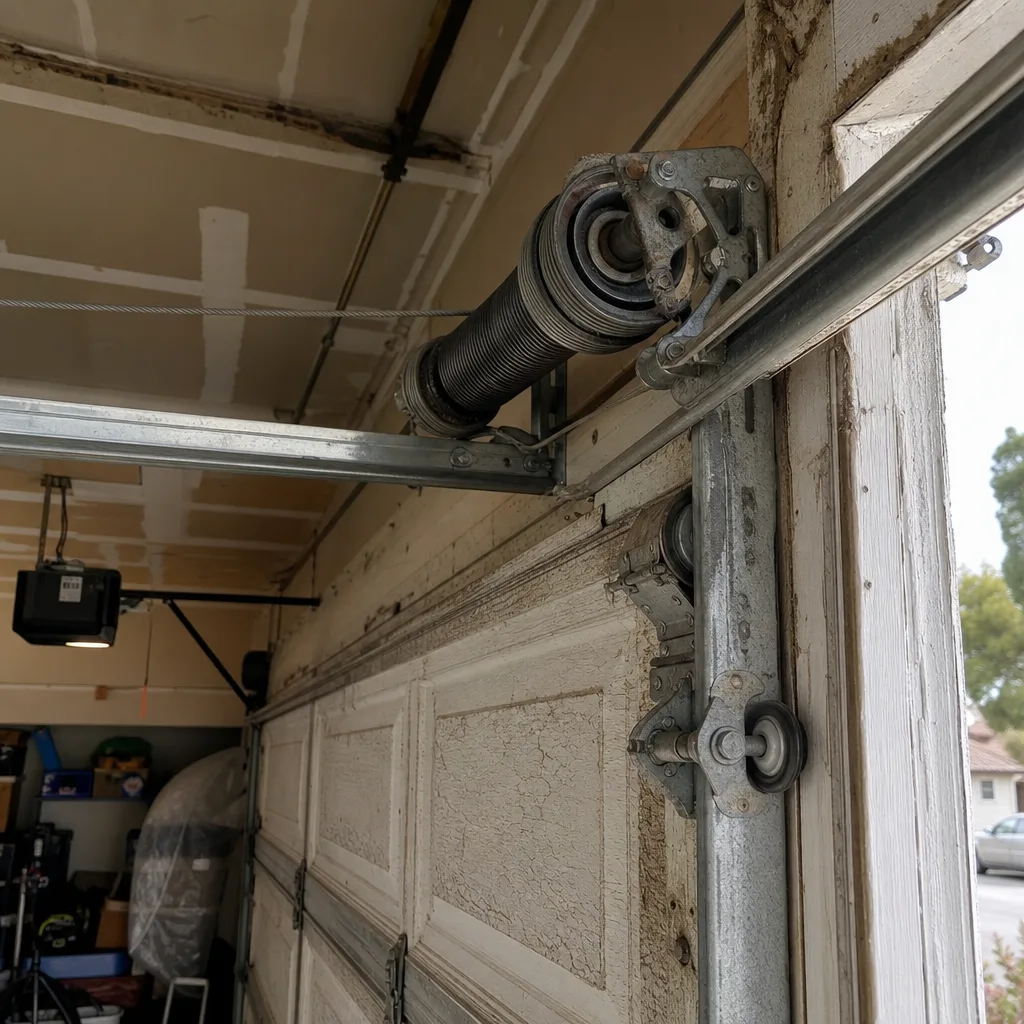 Before
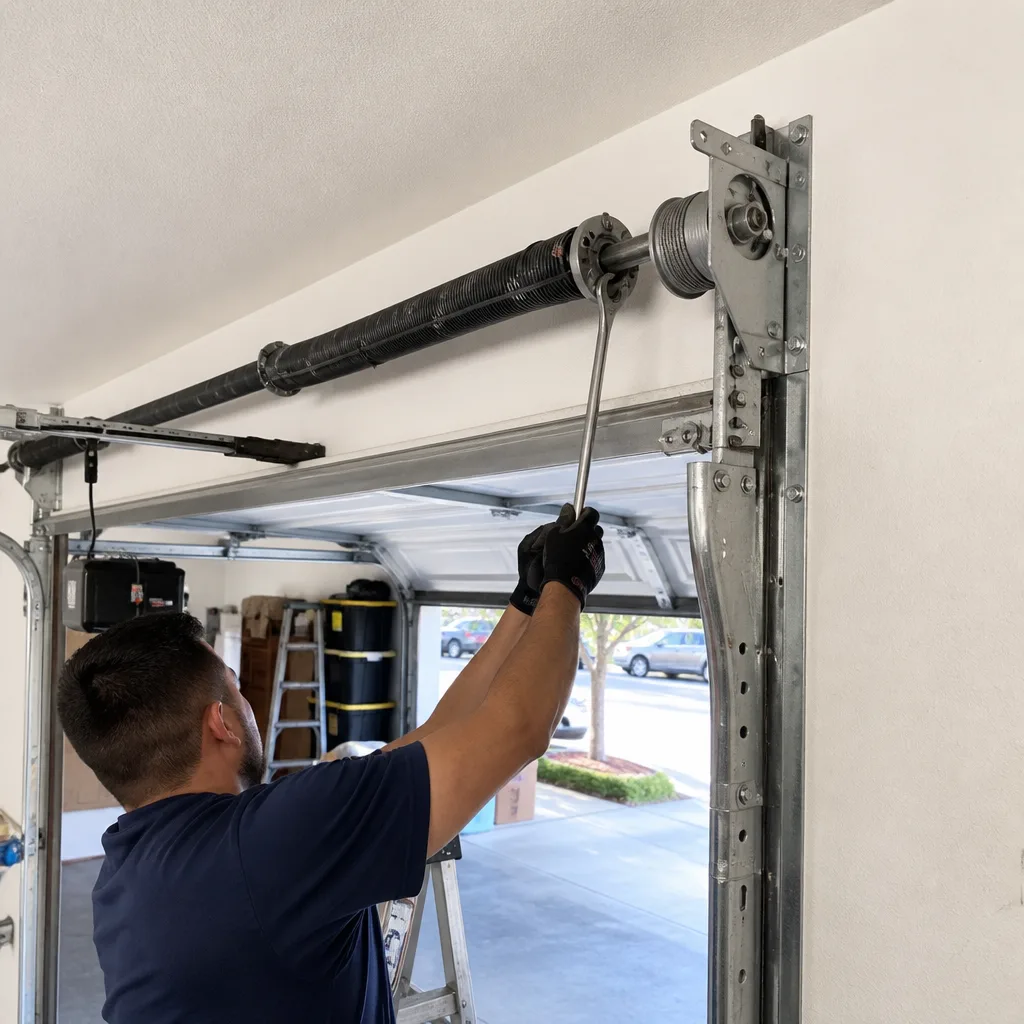 After
After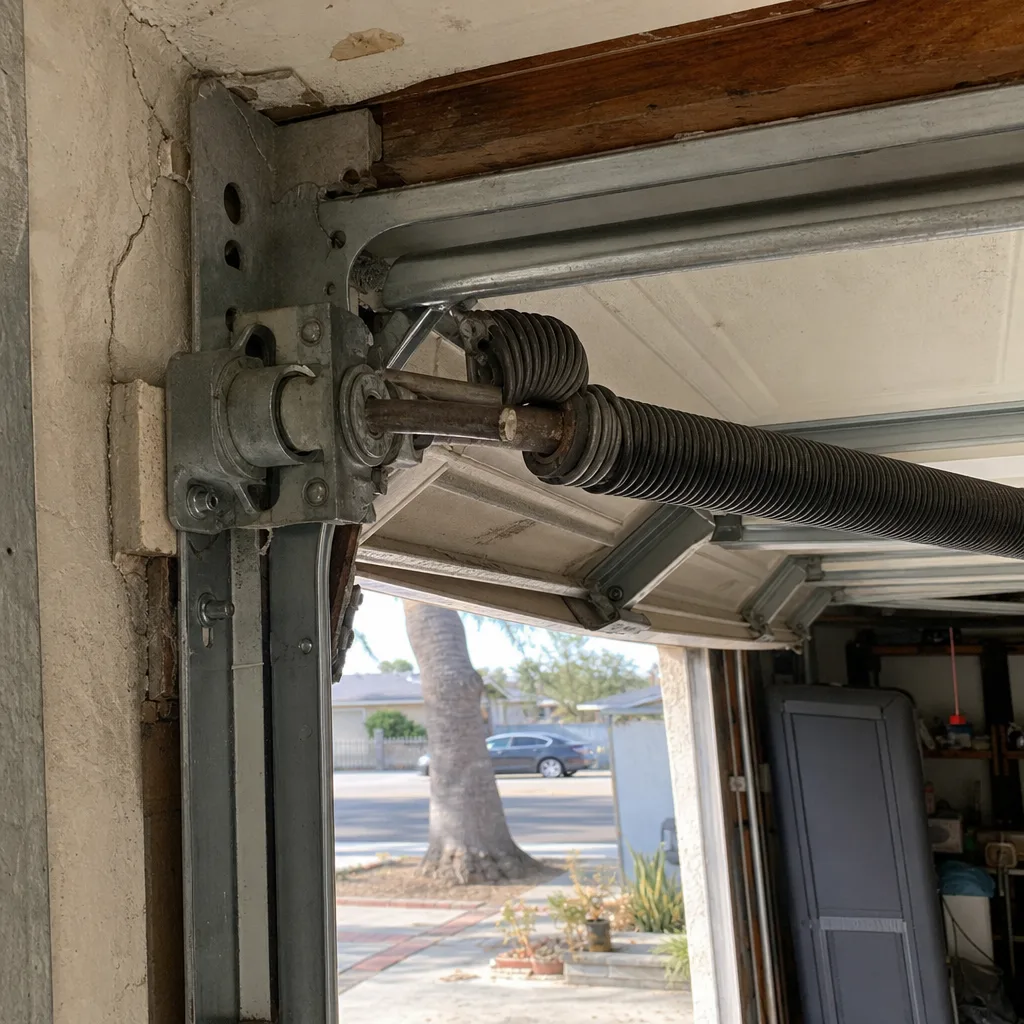 Before
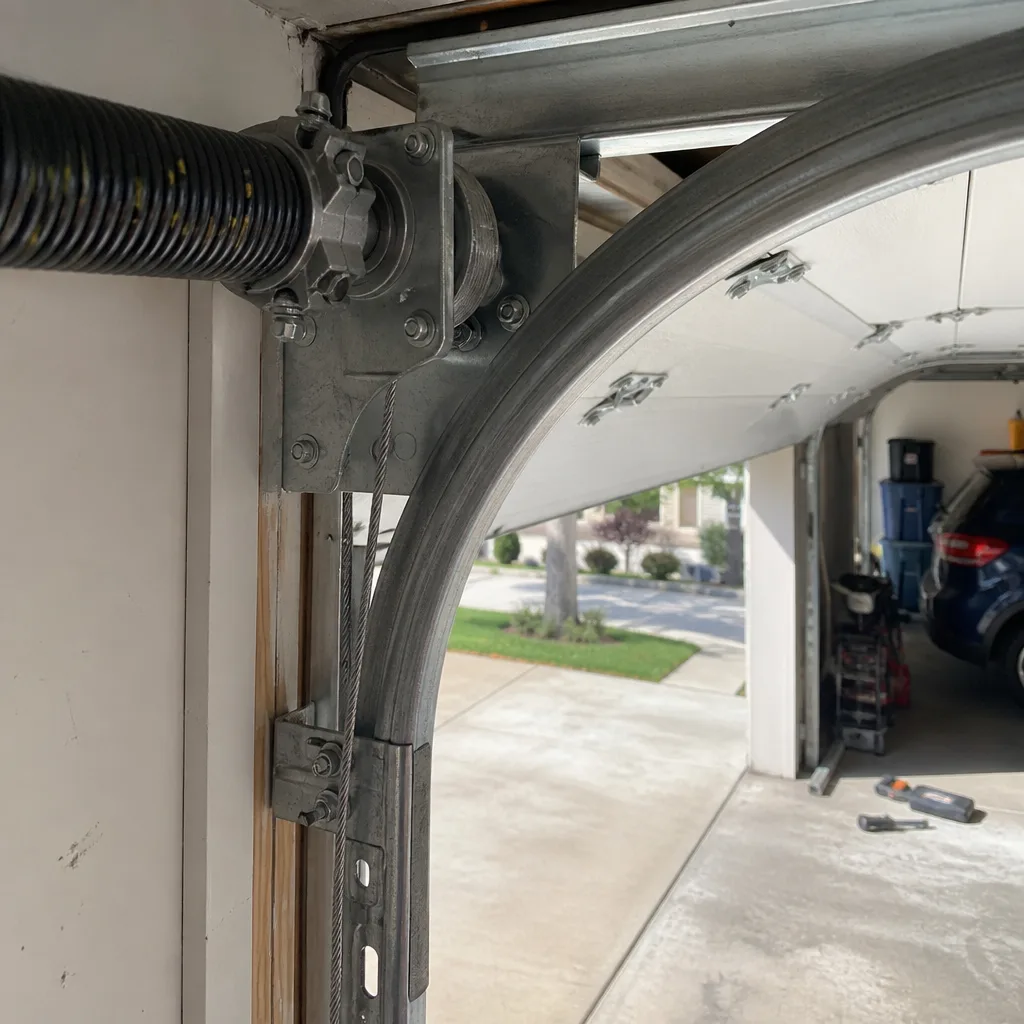 After
AfterGarage Door Warning Signs: A Van Nuys Homeowner’s Reference Guide
A garage door that hesitates one inch before reversing isn’t a sensor problem 70% of the time. It’s a spring that’s lost measurable tension and is about to fail, usually within 30 to 90 operating cycles. In Van Nuys, where summer afternoons push metal components past 140 degrees, that failure window shrinks faster than most homeowners expect. This Complete Guide to Garage Door in Van Nuys pairs each symptom with the specific component causing it, the realistic repair window you have, and the warning signs that demand you stop using the door immediately. You’ll learn which symptoms are unique to our climate, which ones threaten your homeowner’s insurance coverage, and how to describe what you’re seeing so the right parts are on the truck before anyone leaves the shop.
Quick Answer
The most critical garage door warning signs are: a door that won’t stay open halfway (spring failure imminent), a gap between the door and floor when closed (track or panel structural failure), and a loud bang from the garage followed by a door that suddenly feels heavy (broken spring). These three require stopping use immediately. Slower travel, intermittent remote response, and minor grinding allow a scheduled repair window of days to weeks, depending on use frequency.
Table of Contents
- Symptom-to-Component Diagnostic Table
- Three Warning Signs That Are Immediate Safety Stops
- Four Warning Signs That Allow a Scheduled Repair Window
- How Van Nuys Heat Changes the Symptoms
- The Warning Signs That Can Void Your Homeowner’s Insurance
- How to Communicate Symptoms So the Right Parts Arrive
- Common Mistakes to Avoid
- When to Call a Professional
- Frequently Asked Questions
Symptom-to-Component Diagnostic Table
After 42 years in this trade, we’ve learned that homeowners describe symptoms accurately, but the part they blame is usually wrong. A “noisy motor” is often a failing spring forcing the opener to work double. A “broken remote” is frequently a safety sensor knocked out of alignment by a kid’s basketball. This table maps what you observe to what’s actually failing, with urgency levels drawn from our Van Nuys service records.
| What You See or Hear | Component Actually Failing | Urgency | Typical Van Nuys Repair Window |
|---|---|---|---|
| Door reverses 1-2 inches after touching floor | Spring tension loss (not sensor) | High | 1-3 weeks of normal use |
| Loud bang, door now feels heavy | Broken torsion or extension spring | Immediate stop | Emergency repair same day |
| Grinding during travel, especially mid-panel | Worn rollers or bent track section | Medium | 2-4 weeks; sooner if grinding worsens |
| Door sags visibly when open halfway | Spring fatigue or cable stretch | High | 1-2 weeks |
| Gap at floor on one side when closed | Track misalignment or cracked bottom panel | Medium-High | 1-2 weeks; immediate if gap admits water/rodents |
| Remote works intermittently, wall button always works | Logic board or antenna interference | Low-Medium | Schedule at convenience |
| Door travels slow, opener strains audibly | Spring at 60-70% of rated cycles | High | 2-3 weeks; monitor closely |
| Shaking or jerking during travel | Loose hardware, worn hinges, or unbalanced door | Medium | 2-3 weeks; hardware can escalate quickly |
| “Works fine in morning, not in afternoon” | Thermal expansion in aluminum track | Medium | Schedule before summer peak |
| Opener light flashes 10 times, door won’t close | Safety sensor misalignment or failure | Low | Same day if blocking use; otherwise flexible |
The pattern in our Van Nuys calls: spring-related symptoms are misdiagnosed by homeowners more than any other category. The spring carries the door’s entire weight, which is why we named our company for it. When the spring weakens, every other component compensates until something gives.
Three Warning Signs That Are Immediate Safety Stops
These three symptoms mean stop using the door. Not “be careful.” Not “call next week.” Stop. The risk of injury or sudden complete failure is too high.
1. The Loud Bang Followed by a Heavy Door
A torsion spring stores enough energy to lift 150 to 400 pounds of door weight. When it breaks, that energy releases in a fraction of a second. Homeowners in Lake Balboa and the Van Nuys airport-adjacent neighborhoods describe it as sounding like a gunshot or a car backfiring. Afterward, the door feels twice as heavy because the opener is now trying to lift the full dead weight alone.
Continuing to operate the door strains the opener gear set, risks cable derailment, and can cause the door to slam shut uncontrollably. We’ve replaced openers that were ruined in a single day of use after a spring broke, turning a $220 spring repair into a $680 opener replacement. The 90-Day Done Right Promise covers our work, but it can’t undo damage you do to your own equipment by running it broken.
2. A Door That Won’t Stay at Half-Mast
Disconnect the opener and lift the door manually to waist height. If it drifts down, the springs are no longer counterbalancing properly. This is the most reliable field test we know, and it works on every door type from a basic steel Raynor to a custom Amarr carriage house model.
A door that won’t stay put is a door that could close on a pet, a child, or your hands while you’re unloading groceries. In Van Nuys, where many homeowners use the garage as primary entry, this test should be run seasonally as part of year-round garage door care. Spring fatigue accelerates in heat, and our summer afternoons are hard on metal fatigue.
3. Visible Cable Fraying or Off the Drum
The lift cables run vertically along each side of the door, winding around drums at the top. If you see fraying strands, a cable riding off its drum, or any gap in the cable wrap, stop. A cable under tension that snaps can lash with enough force to break bone. We’ve seen cables slice through drywall when they fail.
This is not a lubrication issue. Fraying means internal strands have already failed. The cable is living on borrowed time, and that time is measured in cycles, not weeks.
Four Warning Signs That Allow a Scheduled Repair Window
Not every symptom demands emergency response. These four allow you to plan, compare estimates, and schedule at a convenient time. The key is not letting them drift into the emergency category through neglect.
1. Slower Travel Speed With No Obvious Obstruction
A door that takes 14 seconds to open instead of its usual 10 is telling you the opener is working harder. The cause is almost always spring tension loss. The door still moves, but the motor is drawing more amperage and heating up. This is the symptom we see most often in Sherman Oaks and Van Nuys homes with 15-year-old original springs.
Repair window: 2-4 weeks of normal use, less if you operate the door more than 4 times daily. Schedule before the opener’s internal thermal overload starts tripping.
2. Intermittent Remote Response
If the wall button works every time but the remote is hit-or-miss, the issue is almost never the opener motor. Possible causes: failing remote battery (replace first, costs $4), logic board antenna degradation, or radio frequency interference from new LED bulbs or neighborhood WiFi mesh expansion. In the Van Nuys flats, we’ve traced interference to new apartment building WiFi deployments on 2.4 GHz.
Repair window: Flexible. This is inconvenient, not dangerous. But don’t let months pass, because the underlying board issue can progress to total failure.
3. Grinding or Squealing That Worsens Over Weeks
Metal-on-metal grinding means rollers, hinges, or track. Plastic roller grinding means the rollers have disintegrated and the door is riding on the steel stem. Either way, the damage compounds. A grinding roller eventually seizes, which bends the track, which stresses the panels.
Repair window: 2-3 weeks. The $89 Seasonal Tune-Up we offer addresses this before it escalates. Most grinding we see in Van Nuys is preventable maintenance that was deferred.
4. Minor Panel Damage or Cosmetic Rust
A dented top panel or surface rust on a steel door doesn’t threaten operation today. But rust on the bottom panel, where it meets the concrete, accelerates in our climate. Morning dew wicks up, afternoon heat bakes it in, and the panel weakens from the bottom up. We’ve replaced bottom panels in Van Nuys that looked fine from the outside but were paper-thin from behind.
Repair window: 1-3 months for cosmetic issues; 2-4 weeks for bottom panel rust that you can feel as pitting.
How Van Nuys Heat Changes the Symptoms
Standard garage door troubleshooting guides were written for temperate climates. They don’t account for what happens when your garage interior hits 110 degrees by 3 PM in July.
Thermal expansion in aluminum track. Aluminum expands roughly twice as much as steel per degree. A 20-foot-wide door in a 100-degree garage can gain nearly 1/4 inch in track width. Rollers that glide smoothly at 8 AM bind by 2 PM. Homeowners call us saying “the door works fine in the morning but not in the afternoon.” This isn’t a mystery. It’s physics, and it’s predictable in Van Nuys from June through September.
The fix isn’t always replacement. Sometimes track spacing adjustment solves it. Sometimes switching to nylon rollers with higher temperature tolerance is the better long-term answer. We stock both options on our trucks because we’ve seen this pattern for decades.
Opener thermal overload. Garage door openers have internal thermal cutoffs. When the motor works harder, it runs hotter. In a hot garage, it trips sooner. A door with marginally weak springs that operates fine in March starts failing in August, not because the springs got worse in four months, but because the opener can’t dissipate heat fast enough.
Lubricant breakdown. Standard white lithium grease thins significantly above 100 degrees. It drips onto the door, attracts dust, and leaves metal surfaces dry. We use high-temperature synthetic lubricants on every Van Nuys job because we’ve learned what survives our summers.
Sensor drift. Safety sensors are optical. Heat haze in a garage, especially near the floor where hot concrete meets cooler air, can scatter the beam enough to cause intermittent misalignment. If your door reverses randomly on summer afternoons, check whether the sun is hitting the sensor lens through a window or open door. We’ve solved “intermittent” sensor problems simply by shading the receiver.
The Warning Signs That Can Void Your Homeowner’s Insurance
This is the section competitors don’t write, because it requires understanding policy language, not just door mechanics. We’ve consulted with insurance adjusters on claims where garage door condition was a factor.
Spring tension and opener force settings. Every opener has adjustable force limits. When springs weaken, homeowners or handymen often crank up the opener force to compensate. This is dangerous and potentially coverage-voiding. If an improperly adjusted door injures someone, your insurer may deny the claim based on “failure to maintain” or “unauthorized modification” clauses. We’ve seen this language in standard California HO-3 policies.
The correct response to a door that needs more force to close is spring replacement or adjustment, not opener recalibration. We check force settings on every service call and document them.
Known structural damage left unrepaired. A cracked bottom panel or separated track that you knew about, documented in emails or texts, and didn’t address can become a coverage issue if the door fails and damages a vehicle or injures a person. Insurance covers sudden and accidental. It does not cover gradual failure that you monitored and ignored.
DIY spring replacement gone wrong. Homeowner’s policies typically exclude injury from work the policyholder performed on their own property if that work required professional licensing. Torsion spring replacement in California is not legally restricted to licensed contractors, but injury from high-tension spring work has been successfully argued as “work outside the policyholder’s expertise” in claim denials.
We are not insurance agents, and policy language varies. But we’ve been asked to provide service records in enough claims to know this: documented professional maintenance protects you. “I meant to call someone” does not.
How to Communicate Symptoms So the Right Parts Arrive
The single biggest cause of return visits in our industry is wrong parts on the first trip. This costs you time and costs the company money. Here’s how to prevent it.
- Record the sound. A 10-second video of the door operating, with audio, tells us more than a paragraph of description. Grinding, banging, and straining each have distinct acoustic signatures.
- Measure the door. Width, height, and approximate age. A 16×7 door from 2005 uses different spring specs than a 16×7 from 2015, even from the same manufacturer. Wayne Dalton changed their spring systems significantly in 2012. Craftsman openers branded before 2018 are often Chamberlain internals; after 2018, they’re often different.
- Note the brand and model. The opener’s model number is on a sticker near the light lens or on the back of the motor unit. The door’s brand is usually on a sticker in the top interior panel or etched into the hinge hardware.
- Describe timing precisely. “Started two weeks ago” is different from “started after the heat wave.” “Only in the afternoon” points to thermal expansion. “Only when it’s cold” suggests lubricant thickening or battery voltage drop.
- Test the manual release. Pull the red emergency release cord and operate the door by hand. Does it move smoothly? Stay at half-height? Feel heavy? Report exactly what happens.
- Count the flashes. Most openers blink a diagnostic code. Chamberlain and LiftMaster units flash the light a specific number of times: 1 flash for sensor issue, 2 for open wire, 4 for sensor misalignment, 5 for motor overload. Genie uses a different pattern. Count them accurately.
When you call Mainspring Garage Door Co. home at (747) 836-1998, our live person will ask these questions. The answers let us load the right springs, cables, rollers, or opener components before we leave the shop. Most jobs are completed in a single visit because of this pre-call discipline.
Common Mistakes to Avoid
- Adjusting the opener force to compensate for weak springs. This masks the real problem and creates a safety hazard. The door should close with minimal force. If it needs more, the springs are failing.
- Lubricating the track. Rollers need lubrication. Tracks need to be clean and dry. Grease in the track collects dust and hardens into an abrasive paste. We’ve cleaned this mistake off hundreds of Van Nuys doors.
- Ignoring a door that “still works.” In our experience, “still works” is what homeowners say the week before “won’t open at all.” The cost difference between scheduled spring replacement and emergency spring replacement plus opener damage is typically $200-400.
- DIY spring replacement after watching a video. Torsion springs store lethal energy. The winding bars can slip, the cone can fracture, or the spring can unwind unpredictably. We carry specific tools and training for this. The $180-340 you might save is not worth the emergency room risk.
- Replacing the opener when the springs are the real problem. A $600 opener replacement won’t fix a door that feels heavy. The new opener will strain and fail too. We see this in older Van Nuys homes where a previous owner or handyman took the wrong shortcut.
- Waiting for “both springs” to break. Dual-spring systems are designed so one spring can temporarily carry the load if the other fails. This is a safety margin, not a design feature to exploit. Operating on one spring guarantees premature opener failure.
- Not testing after any repair. Even professional work should be verified. Run the full cycle, test the manual release, check the auto-reverse with a 2×4 on the floor. Any technician who objects to your verification is not someone you want in your home.
When to Call a Professional
Call when you observe any of the three immediate safety stops: the loud bang, the door that won’t stay at half-mast, or visible cable damage. Call when symptoms progress from occasional to consistent. Call when you’re unsure whether a symptom is urgent or can wait, because uncertainty itself is information.
For scheduled concerns, Garage Door Repair in Van Nuys from Mainspring Garage Door Co. starts with a free estimate. We state the flat price before any work begins. Our trucks carry springs, cables, rollers, and openers for all major brands. Most jobs finish in one visit. The 90-Day Done Right Promise covers every completed job in writing.
Call (747) 836-1998. A live person answers, 24/7, including nights, weekends, and holidays. No phone trees. No voicemail. No after-hours answering service.
Frequently Asked Questions
Spring repair in Van Nuys typically runs $180-340 for a standard residential torsion spring replacement, depending on door size, spring type, and whether one or both springs need replacement. We quote the exact price before starting work, and our $50 Off Any Repair Over $250 applies. Call (747) 836-1998 for a free estimate.
You can safely replace remote batteries, clean photo-eye sensors, and lubricate rollers. You should not attempt spring replacement, cable repair, or track realignment. These components are under high tension and cause serious injury without proper tools and training. We’ve responded to emergency calls where a homeowner’s DIY attempt made the problem worse and more expensive.
This is almost always thermal expansion in the aluminum track, common in Van Nuys from June through September. Aluminum expands significantly in heat, and afternoon garage temperatures above 100 degrees can narrow the roller clearance enough to cause binding. Track adjustment or switching to high-temperature nylon rollers typically solves it. Schedule before the pattern becomes daily.
No. The price we quote after your description and any photos is the price you pay. If we discover additional issues on arrival, we explain them and quote separately before proceeding. No surprises on the bill is a core principle at Mainspring. The 90-Day Done Right Promise is in writing on every job.
Yes. Our trucks are stocked with springs, cables, rollers, hinges, and opener components for LiftMaster, Chamberlain, Genie, Clopay, Amarr, Wayne Dalton, Craftsman, and Raynor systems. This is why most repairs are completed in a single visit. For Garage Door Opener in Van Nuys replacement, we carry the most common models and can order same-day for less common units.
Every 12-18 months for standard use, every 10-12 months for doors operated more than 4 times daily. Our $89 Seasonal Tune-Up includes spring tension check, roller and hinge inspection, track alignment verification, opener force setting test, and safety sensor alignment. For more guides & resources on garage door maintenance, visit our blog. The senior and veteran 5% discount applies. In Van Nuys, we recommend scheduling before summer heat peaks, as thermal stress accelerates wear.
If any aspect of our work is not right, we return and make it right at no charge. No paperwork to file, no dispute process, no expiration date within those 90 days. The promise is stated in writing on every invoice. We’ve honored it since 1984, and it’s one reason homeowners who call us once tend to call us again.
Consider replacement when repair costs exceed 50% of a new door, when panels are rusted through, when the door lacks modern safety features like pinch-resistant panels, or when you’re selling the home and curb value matters. Garage Door Installation in Van Nuys from Mainspring includes free measurement, written quote, and removal of the old door. We install Clopay, Amarr, Wayne Dalton, and other major brands.
The Bottom Line
Garage doors warn you before they fail. The warning signs are specific, mappable to exact components, and often climate-modified in ways that matter for Van Nuys homeowners. The three safety stops, spring tension and cable integrity, demand immediate cessation of use. The four scheduled-repair symptoms, slow travel and grinding and intermittent response, give you planning time that saves money and prevents escalation. Heat changes the rules here. Insurance cares whether you acted on what you knew. And precise communication gets the right parts on the truck, which gets your door fixed in one visit.
We’ve been doing this since 1984. The work hasn’t changed much. What has changed is that homeowners now have access to better information, if they know where to look. This guide is where to look.
Written by Carl Dutton, Owner at Mainspring Garage Door Co., serving Van Nuys since 2016.