
Last updated September 10, 2026
Full 25-point door and opener safety check with every visit - springs, cables, rollers, tracks, and your LiftMaster or Chamberlain opener included
You get a price before we start. It does not change when the truck arrives.
 Before
 After
After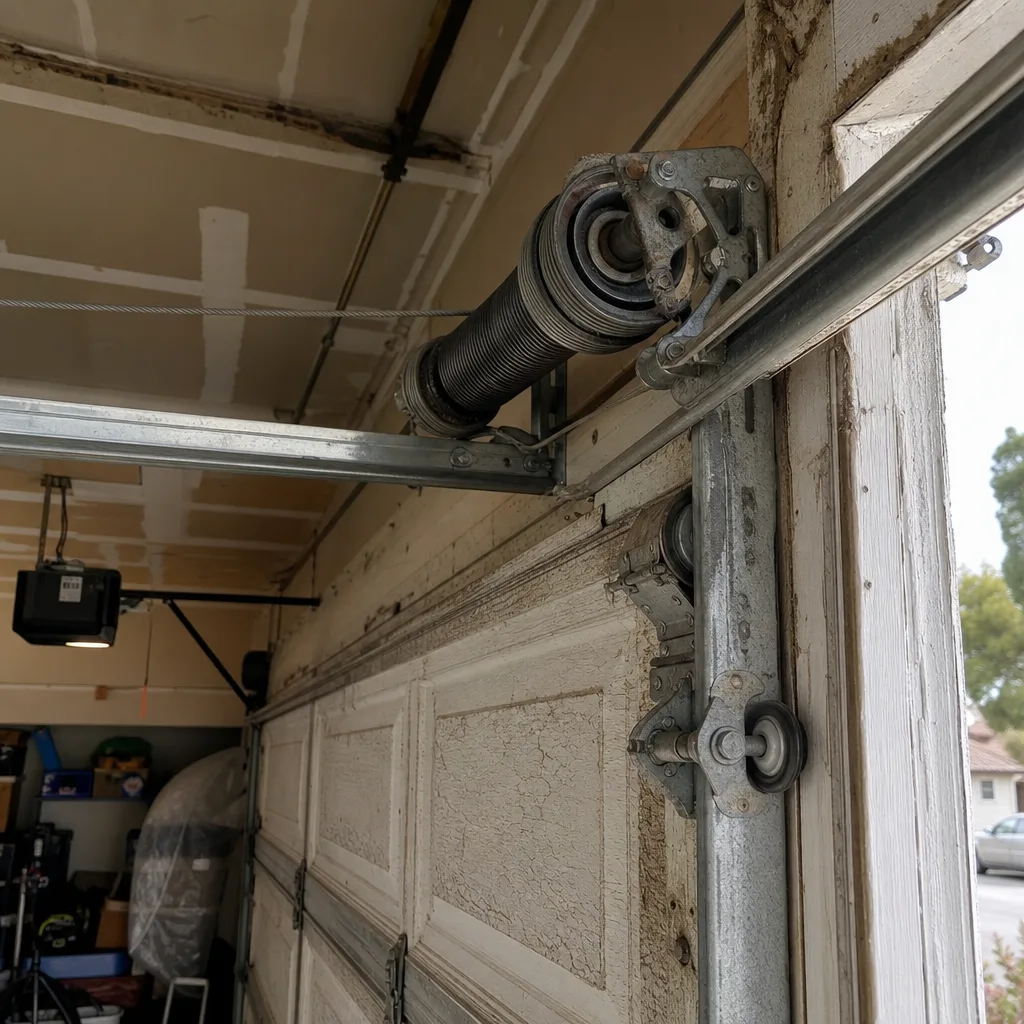 Before
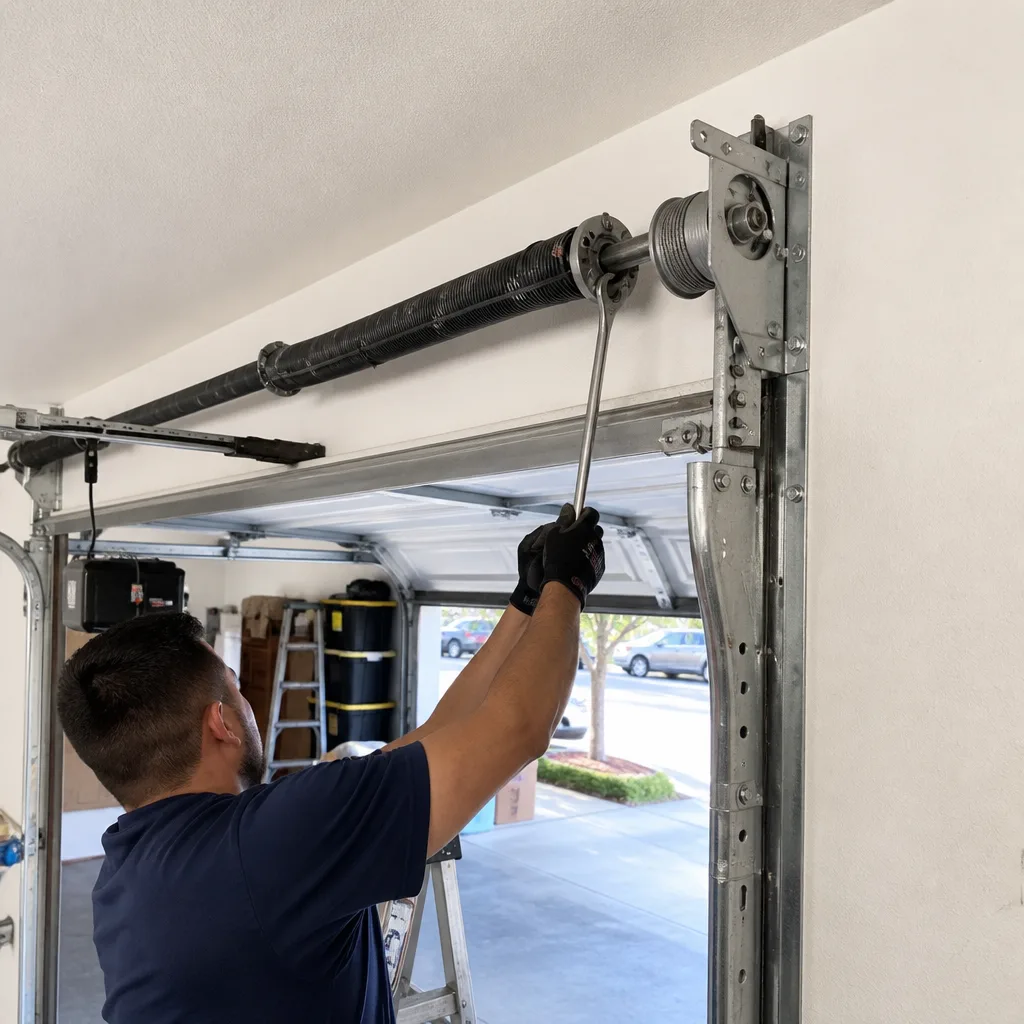 After
After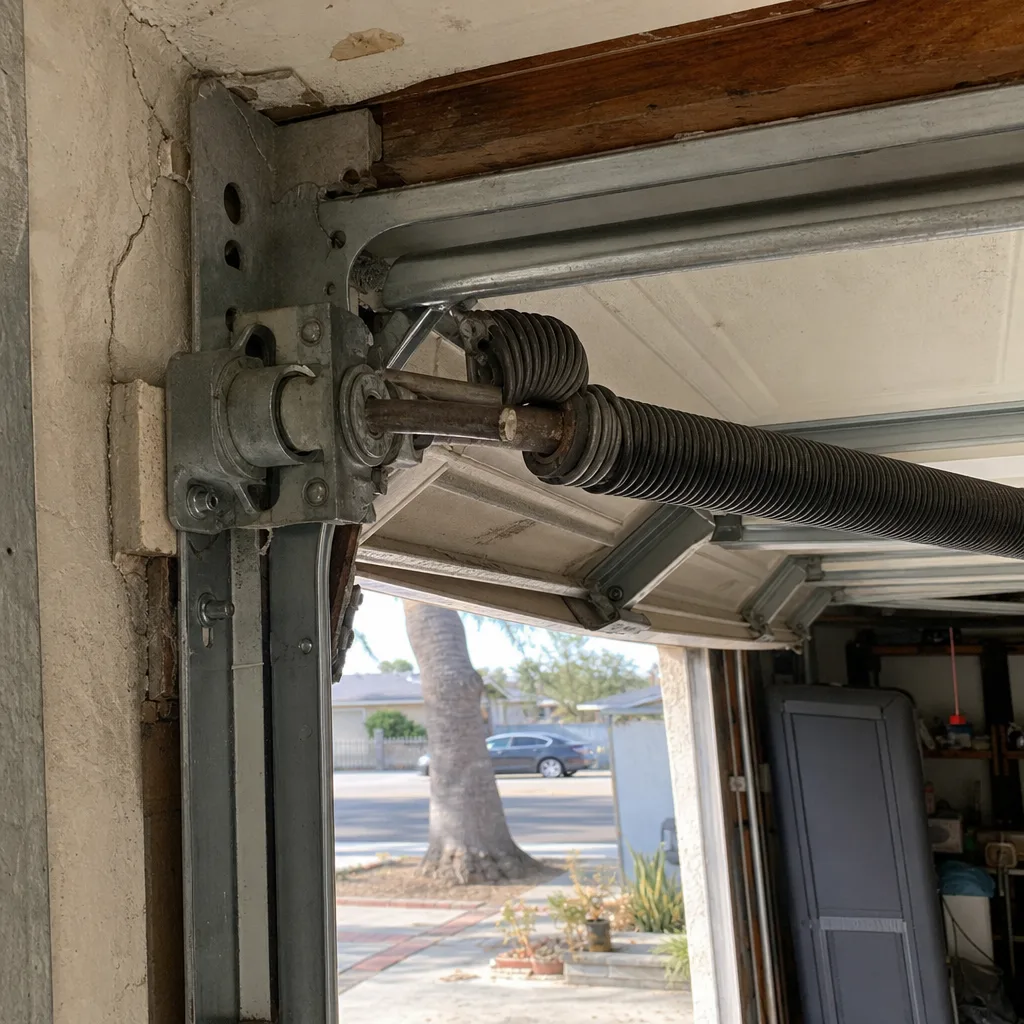 Before
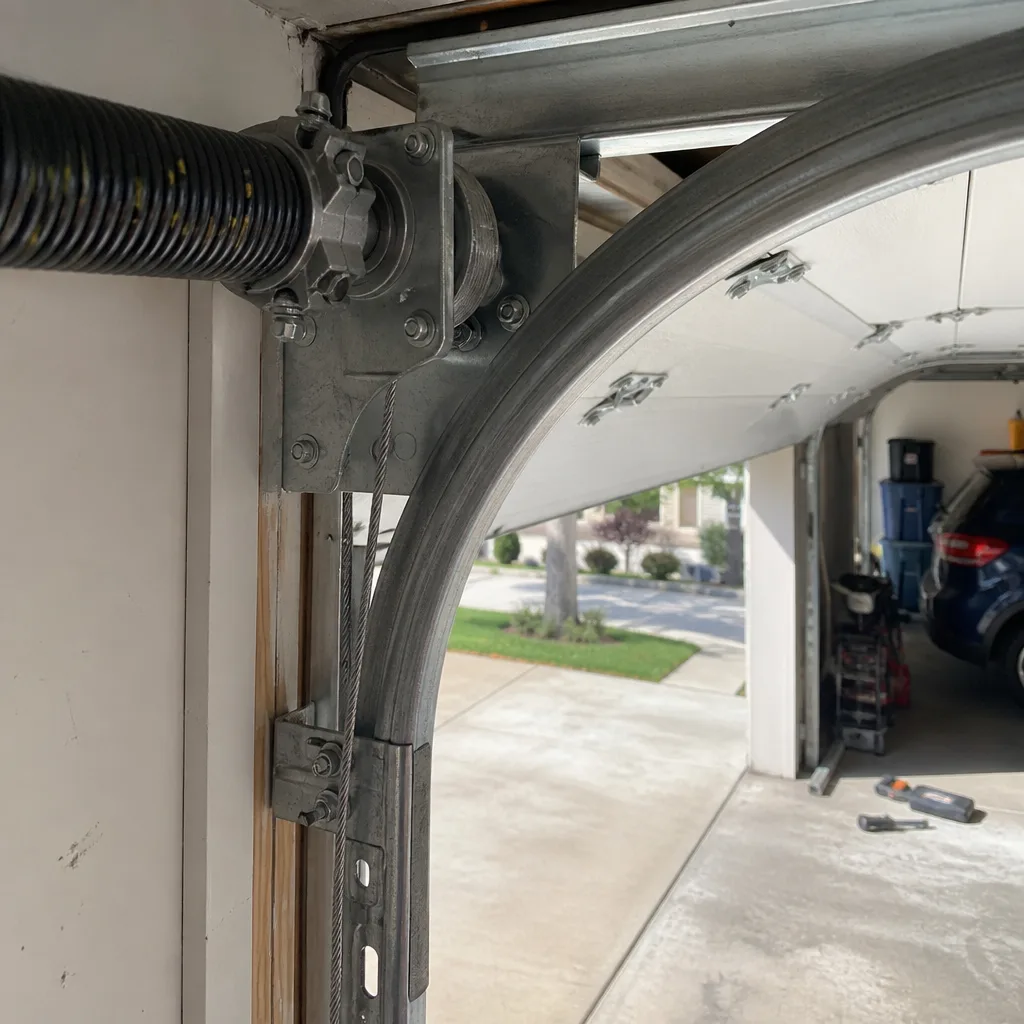 After
AfterGarage Door Permits, Codes & Inspections in CA: What You Need to Know
Replacing a garage door without a permit in California won’t trigger a fine tomorrow, but it can kill a home sale. A Los Angeles County home inspector is required to flag unpermitted work, and the cost to retroactively permit a job typically runs two to four times the original permit fee. In our 42 years serving Van Nuys and surrounding communities, we’ve watched this surprise land on homeowners at the worst possible moment - usually with a buyer’s inspector sitting at the kitchen table. This guide draws the exact line between permit-exempt repairs and jobs that require LADBS sign-off, so you know where you stand before the first wrench turns. For related reading, see our Garage Door Warning Signs: A Van Nuys Homeowner’s Reference Guide.
Quick Answer
In California, garage door replacement and new opener installation with electrical work require a permit in Los Angeles County. Simple repairs - spring replacement, cable adjustment, roller swaps, and routine maintenance - do not. See our Garage Door Repair Maintenance Checklist for Van Nuys Homeowners for a full breakdown. The permit process through LADBS takes 2-5 business days for plan review and requires a final inspection for sign-off; without that inspection, the permit remains open and the work is not legally complete.
Table of Contents
- When Is a Garage Door Permit Required in California?
- The Specific CBC Sections That Govern Your Door
- California’s Mandatory Seismic Disconnect Requirement
- How the LADBS Permit Process Works for Van Nuys
- Permit vs. Inspection Sign-Off: Why the Difference Matters
- What to Do If Prior Work Was Done Without a Permit
- Permit Costs and Fee Schedules in Los Angeles County
- Common Mistakes to Avoid
- When to Call a Professional
- Frequently Asked Questions
- The Bottom Line
When Is a Garage Door Permit Required in California?
California Building Code defers to local jurisdictions for enforcement, and Los Angeles County - including Van Nuys - operates under the Los Angeles Department of Building and Safety (LADBS). The rule is straightforward in principle, murky in practice: any work that alters the structure, changes the opening size, or involves new electrical circuits needs a permit. Everything else falls under ordinary maintenance.
Here is the breakdown we use in the field:
Permit Required
- Installing a new garage door where none existed before
- Replacing an existing door with a different size or type (converting a one-piece tilt-up to a sectional roll-up, for example)
- Modifying or enlarging the rough opening
- Installing a new garage door opener that requires a dedicated electrical circuit
- Structural modifications to the header, jambs, or supporting walls
No Permit Required
- Spring replacement (torsion or extension)
- Cable repair or replacement
- Roller, hinge, or bracket replacement
- Panel replacement on an existing sectional door (same dimensions)
- Opener repair, programming, or sensor alignment
- Routine lubrication, balance adjustment, and safety testing
The gray area trips people up. Swapping a dented bottom panel on a Clopay sectional? No permit. Replacing the entire door with a new Amarr model of identical dimensions? Technically a replacement, and LADBS generally does not require a permit if the opening is unchanged. But swapping a 16-foot door for an 18-foot door to accommodate a wider vehicle? That is structural modification, and it absolutely requires a permit.
In Van Nuys, we see this confusion most often with homeowners in the Lake Balboa and Sherman Oaks-adjacent neighborhoods, where 1950s-era carports were later enclosed with tilt-up doors. Those retrofits often lack original permits, which complicates any subsequent work. Before we quote a replacement on these homes, we check whether the existing installation was ever permitted. It saves everyone a headache later.
The Specific CBC Sections That Govern Your Door
The California Building Code (CBC) incorporates the International Building Code with state amendments. For garage doors, the relevant provisions are scattered across several chapters, but the ones that actually affect homeowners in Van Nuys are specific and enforceable.
CBC Section 105.1 establishes the baseline: work regulated by the code requires a permit unless explicitly exempted. The exemptions appear in Section 105.2, which covers ordinary repairs - but “ordinary” has a precise meaning. It means replacement of existing components with equivalent materials, without structural change. A new spring of the same wire size and length qualifies. A new door that changes the wind load on the structure does not.
CBC Section 1609 governs wind loads. In Los Angeles County, garage doors must resist the design wind pressures specified for the region. This matters for Van Nuys homeowners because the San Fernando Valley sees higher wind gusts than coastal LA, particularly during Santa Ana events. A door rated for a milder climate will not pass inspection here. We specify WindCode-rated doors on every installation, and LADBS inspectors verify the label.
CBC Section 3109 addresses vehicle barriers and door safety. Garage doors must have automatic reversal systems, and the bottom edge must withstand specified impact forces. This is where the photo-eye sensors and pressure-sensitive bottom seals come in - not optional accessories, but code-mandated safety devices.
Los Angeles County-specific amendments add layers. The city of Los Angeles, which governs Van Nuys, requires compliance with LADBS Information Bulletin P/BC 2017-058 for all mechanical permits. This bulletin specifies the documentation required for garage door opener installations, including electrical load calculations and manufacturer cut sheets. We prepare these packets in advance so the permit application moves without delay.
One detail competitors rarely mention: the CBC references ANSI/DASMA 102 and ANSI/DASMA 105 for sectional door construction and wind load testing. Not every installer knows to check these standards, but LADBS inspectors do. A door without the proper DASMA certification label will fail inspection, and the homeowner bears the cost of replacement. We verify certification before the door ever leaves our warehouse.
California’s Mandatory Seismic Disconnect Requirement
California’s garage door code includes a provision that surprises nearly every homeowner we speak with in Van Nuys: all automatic garage door openers installed after January 1, 1993 must include a seismic disconnect feature. This requirement stems from California Health and Safety Code Section 19891, enacted after the 1989 Loma Prieta earthquake revealed how garage doors could jam shut, trapping vehicles and blocking emergency access.
The seismic disconnect is a simple mechanism in principle. When ground motion exceeds a threshold, the opener releases the door from the drive system, allowing manual operation. In practice, it is a small component that most homeowners never think about - until it fails to function during an inspection.
Here is what the requirement means in real terms:
- New installations: Every opener we install - LiftMaster, Chamberlain, Genie, or otherwise - includes a compliant seismic disconnect. We document the feature on the installation checklist, and LADBS inspectors verify it during the final inspection.
- Existing openers: Pre-1993 openers are grandfathered, but any replacement triggers the current code. We see homeowners in the older neighborhoods of Van Nuys, particularly south of Victory Boulevard, still running Craftsman units from the 1980s. When those finally fail, the new unit must include seismic compliance.
- The inspection step most skip: Even homeowners who pull permits for opener installation often forget to test the seismic disconnect during the final inspection. LADBS requires a functional demonstration. We perform this test with the inspector present, cycling the door and simulating the disconnect condition. Without this step, the inspection fails and the permit remains open.
The seismic disconnect is not a sales feature. It is not something we upsell. It is simply code, and it is non-negotiable in Los Angeles County. We have replaced openers for homeowners who bought units online, installed them themselves, and then discovered at resale that the installation lacked both permit and seismic compliance. The retroactive fix costs more than the original professional installation would have.
How the LADBS Permit Process Works for Van Nuys
Van Nuys falls under the jurisdiction of LADBS’s Van Nuys District Office at 14340 Sylvan Street for permit intake, though plan review and inspection scheduling now flow through the centralized LADBS system. Understanding the actual sequence prevents the delays that frustrate most homeowners.
Step-by-Step: The LADBS Permit Process for Garage Door Work
- Determine permit type. Garage door replacement typically requires a Mechanical Permit (M-permit). Opener installation with new electrical circuit may also require an Electrical Permit (E-permit). Structural modifications trigger a Building Permit (B-permit). We identify the correct permit type before application to avoid rejection.
- Prepare documentation. For a standard replacement, this includes the manufacturer’s specification sheet, wind load certification, and a site plan showing the door location. For opener installation, add the electrical load calculation and panel schedule. We compile these packets as part of our installation quote.
- Submit application. LADBS accepts online submission through the EPIC-LA portal or in-person at any district office. Online submission typically processes within 2 business days; in-person can be same-day if the counter is not backed up. Van Nuys homeowners near the Sepulveda Basin often use the Van Nuys office for walk-in service.
- Plan review. Simple mechanical permits for like-for-like door replacement often qualify for over-the-counter approval if documentation is complete. More complex jobs requiring structural or electrical review take 5-10 business days. We have seen delays stretch to three weeks during peak construction season (March through June).
- Pay fees and pull permit. Once approved, fees must be paid before work begins. The permit card must be posted on-site and visible from the street.
- Schedule inspection. This is where homeowners stumble. The permit is not complete until inspected. LADBS requires a final inspection for all garage door permits, and for electrical work, a rough inspection may be required before cover. Inspections are scheduled through EPIC-LA or by phone.
- Obtain sign-off. The inspector verifies code compliance, including wind load rating, safety devices, and seismic disconnect function. A passed inspection generates a Certificate of Final Inspection, which closes the permit.
Realistic timeline for Van Nuys: a straightforward mechanical permit for door replacement, with complete documentation, takes 2-5 business days from application to approval. Inspection scheduling adds 1-3 business days depending on inspector availability. Total elapsed time: one to two weeks. Homeowners who start this process after the door is already installed are working backwards, and LADBS will flag the job for investigation.
One Van Nuys-specific note: properties in the High Fire Severity Zone near the foothills may trigger additional requirements under the Wildfire-Urban Interface Code. This affects door materials and surrounding vegetation clearance, not the door itself, but it adds an inspection layer that standard installations do not face.
Permit vs. Inspection Sign-Off: Why the Difference Matters
Homeowners often conflate “pulling a permit” with “getting approved.” They are separate legal events, and the gap between them creates the most expensive mistakes we encounter.
Pulling a permit means LADBS has reviewed your plans and authorized work to begin. The permit card is issued, fees are paid, and the clock starts. But the permit remains open until a final inspection passes. An open permit is legally incomplete work. It does not protect you at resale. It does not satisfy disclosure requirements. It is simply a pending obligation.
We have worked with Van Nuys homeowners who proudly announced, “We pulled a permit,” only to discover five years later that no inspector ever visited. The permit lapsed. The work was technically unpermitted. The buyer’s inspector flagged it, and the seller faced a choice: pay for retroactive permitting (with possible demolition to expose concealed work) or reduce the sale price.
The critical sequence:
- Permit issued: Work may begin. This is not completion.
- Rough inspection (if required): Electrical or structural work is verified before concealment.
- Final inspection: All work is verified against approved plans and code.
- Certificate of Final Inspection: The permit is finaled and closed. This is the only document that matters for legal compliance.
Some contractors, particularly low-bid outfits, pull permits to appear legitimate but never schedule inspections. They collect final payment and disappear. The homeowner assumes everything is proper. Years later, the open permit surfaces in a title search or inspection report. We have cleaned up after these situations more often than we would like.
Our practice at Mainspring Garage Door Co. is to schedule the final inspection before we leave the job site, with the homeowner present when possible. We do not consider a job complete until the permit is finaled. It is part of our 90-Day Done Right Promise - if the work is not right, we make it right, and that includes permit closure.
What to Do If Prior Work Was Done Without a Permit
Discovering unpermitted garage door work is common in Van Nuys, especially in homes built between 1945 and 1975 when permitting was less rigorous and record-keeping was paper-based. The good news: retroactive permitting is possible. The bad news: it is more expensive and invasive than doing it right the first time.
The Retroactive Permit Process
- Research existing records. LADBS maintains permit history back to the early 1900s, though older records may be incomplete. We help homeowners request a Property Report to establish what is on file. This costs approximately $60 and takes 3-5 business days.
- Assess the work. A licensed contractor must evaluate whether the existing installation meets current code. If the door predates code changes, it may be grandfathered - but only if it was legally installed at the time. Unpermitted work has no grandfather protection.
- Prepare as-built documentation. For work without original plans, we measure and document the existing installation: door dimensions, wind load rating, opener specifications, electrical supply, and safety devices. This becomes the basis for plan review.
- Submit for retroactive permit. LADBS treats this as a new application with additional scrutiny. Fees are typically double the standard rate as a penalty. For complex cases, LADBS may require an engineer’s letter certifying structural adequacy.
- Expose work for inspection. This is the painful part. Inspectors cannot verify concealed electrical or structural work without visual access. We have had to remove drywall, expose header framing, or disconnect and reinstall openers to allow inspection. The cost ranges from $200 for simple exposure to $2,000+ for extensive demolition and repair.
- Correct deficiencies and obtain sign-off. Any code violations identified during inspection must be remedied before final approval. Common issues on retroactive jobs: non-compliant seismic disconnects, undersized headers, ungrounded electrical circuits, and doors without wind load certification.
The documentation that survives retroactive permitting is limited. LADBS keeps permit records and inspection reports permanently, but photographs, contractor invoices, and manufacturer warranties from the original work are often lost. We advise homeowners to maintain a file with all garage door documentation - permits, inspections, warranties, and service records - for as long as they own the home.
In the Sherman Oaks-adjacent areas of Van Nuys, we see a concentration of unpermitted 1980s and 1990s renovations, when the housing boom outpaced inspection capacity. Homeowners in these neighborhoods should be particularly vigilant about verifying permit status before listing for sale.
Permit Costs and Fee Schedules in Los Angeles County
LADBS fees are formula-driven, not arbitrary. Understanding the structure helps homeowners budget accurately and spot inflated contractor markups.
| Permit Type | Base Fee | Valuation Factor | Typical Total (Van Nuys) |
|---|---|---|---|
| Mechanical Permit (door replacement, no structural change) | $137.50 | $ per $1,000 of job value | $180-$320 |
| Electrical Permit (new opener circuit) | $98.50 | $ per $1,000 of job value | $150-$280 |
| Building Permit (structural modification) | $204.00 | $ per $1,000 of job value | $350-$600+ |
| Plan Check Fee (required for building permits) | 65% of permit fee | - | $130-$390 |
| Retroactive Permit Penalty | 200% of standard fee | - | 2× standard total |
| Re-inspection Fee (failed inspection) | $137.50 per occurrence | - | $137.50 |
These figures reflect LADBS’s 2024 fee schedule and are subject to annual adjustment. The “job value” is the contractor’s stated valuation of the work, not the invoice total. Some contractors understate value to reduce fees; this is a misdemeanor and grounds for permit revocation if discovered.
Additional costs homeowners should anticipate:
- Engineer’s letter: $400-$800 for structural adequacy certification on retroactive permits or non-standard installations
- As-built documentation: $150-$300 if the original contractor did not provide plans
- Exposure and repair: $200-$2,000+ to access concealed work for inspection
- Title 24 compliance documentation: Required for new construction; typically $100-$200
We itemize permit costs separately on every Garage Door Installation in Van Nuys quote. No surprises on the bill. The price we state before work begins includes permit, fees, and inspection scheduling. If LADBS adds unexpected requirements, we absorb the cost rather than pass it through. That is how we have operated since 1984.
Common Mistakes to Avoid
- Assuming repair equals replacement in the eyes of LADBS. Swapping a broken spring is maintenance. Swapping a functional door for aesthetic reasons is replacement. The permit requirement changes entirely, and “but it was already there” is not a defense.
- Letting the contractor “handle the permit” without verifying closure. We have seen permits remain open for years because the contractor never scheduled final inspection. Always request the Certificate of Final Inspection before final payment.
- Installing a non-WindCode door in the San Fernando Valley. Van Nuys wind loads exceed coastal LA requirements. A door that passes inspection in Santa Monica may fail here. We verify WindCode ratings for every installation.
- Ignoring the seismic disconnect on opener replacement. Homeowners who buy Genie or Chamberlain units online often receive non-California models without seismic compliance. The box may not flag this. We verify compliance before installation.
- Failing to disclose unpermitted work at sale. California’s Transfer Disclosure Statement requires disclosure of unpermitted modifications. Concealment exposes the seller to post-sale liability, and buyer’s inspectors are trained to spot garage door work that lacks permit history.
- Starting work before permit approval. LADBS can issue a Stop Work Order and impose penalties. Worse, work performed before permit issuance cannot be grandfathered; it must meet current code, which may require undoing completed work.
- Confusing HOA approval with building permit. Many Van Nuys neighborhoods with HOAs, particularly condo complexes near the Van Nuys Airport flight path, require architectural review. This is separate from and in addition to LADBS permitting. Both are required; neither substitutes for the other.
When to Call a Professional
Permit research, code compliance, and inspection coordination are not homeowner hobbies. They are specialized tasks that require familiarity with LADBS procedures, manufacturer documentation, and the specific requirements that apply to Van Nuys addresses. The cost of professional handling is modest compared to the expense of retroactive permitting or a failed home sale.
Call a licensed garage door contractor when: the job involves structural modification; electrical work is required; you are uncertain whether the existing installation was permitted; you plan to sell within five years; or the property is in a high-fire or seismic zone with additional requirements. Mainspring Garage Door Co. offers free estimates in Van Nuys - call (747) 836-1998. We handle permit applications, inspection scheduling, and documentation as standard practice, not upsells. The price we quote is the price you pay, permit included, inspection finaled, paperwork delivered.
Frequently Asked Questions
Not if the replacement is like-for-like with no structural or electrical changes. A standard sectional door swap using the existing opening and opener does not require a permit. If you are enlarging the opening, changing door types, or installing a new electrical circuit for the opener, LADBS requires a permit. Call (747) 836-1998 and we will assess your specific situation at no charge.
A mechanical permit for standard door replacement typically runs $180-$320, including base fee and valuation charges. Electrical permits for new opener circuits add $150-$280. Retroactive permits cost double. We itemize these fees upfront on every quote - no surprises on the bill.
Simple mechanical permits with complete documentation clear in 2-5 business days. Inspection scheduling adds 1-3 business days. Complex jobs requiring structural or electrical plan review take 5-10 business days, longer during peak season. We prepare documentation in advance to keep timelines minimal.
The buyer’s inspector is required to flag it, and the buyer’s lender or title company may require permit clearance before closing. You will face a choice: negotiate a price reduction, pay for retroactive permitting (typically 2-4× the original fee), or risk the sale falling through. Disclosure is legally required on California’s Transfer Disclosure Statement.
Yes, if it was installed after January 1, 1993. All automatic openers in California must include a seismic disconnect mechanism that releases the door for manual operation during earthquake conditions. LADBS inspectors verify this function during final inspection. We test it with the inspector present on every installation.
Homeowners can pull permits as owner-builders, but LADBS requires the work to be performed by a licensed contractor or under direct homeowner supervision with liability risks. Most homeowners find the documentation requirements - manufacturer specs, wind load certifications, electrical calculations - burdensome. We include permit handling in our standard installation service at no additional markup beyond actual LADBS fees.
The Bottom Line
California’s garage door permit rules are not designed to generate revenue. They exist to ensure structural safety, electrical integrity, and life-safety features like wind resistance and seismic release. The enforcement is selective - LADBS does not patrol neighborhoods - but the consequences arrive with certainty at resale, when a buyer’s inspector has both duty and incentive to flag every irregularity.
The practical rule for Van Nuys homeowners: permit any job that changes structure or adds electrical circuits; do not permit routine maintenance and like-for-like component replacement; and never consider a permit “handled” until the Certificate of Final Inspection is in hand. The cost of doing it right the first time is modest. The cost of retroactive correction is not.
We have guided homeowners through this process for 42 years. The ones who sleep best are the ones who asked the questions before the work began. Browse more guides & resources to stay informed.
Written by Carl Dutton, Owner at Mainspring Garage Door Co., serving Van Nuys since 2016.